Modern metal fabrication offers several ways to cut steel, aluminum, and other metals, but choosing the right process can feel overwhelming. Each cutting method brings different strengths related to speed, precision, cost, and material thickness. Understanding those differences helps avoid wasted time and unnecessary expense.
In many shops, the conversation often centers on laser cutting because of its reputation for accuracy and clean edges, but it is far from the only solution. Plasma cutting and shear cutting continue to play important roles across industries. This guide breaks down how each method works, when it makes sense to use it, and what factors matter most when comparing them.
With the right information, you can confidently select the cutting process that aligns with your project requirements, budget, and production timeline.
How Plasma Cutting Works and When It Makes Sense
Plasma cutting uses an electrically conductive gas to create a high temperature plasma arc that melts metal and blows it away from the cut path. This process is particularly effective for thicker materials and conductive metals such as steel, stainless steel, and aluminum. Plasma cutting is commonly chosen when speed and versatility matter more than ultra fine precision.
It performs well in heavy fabrication, structural steel work, and repair environments. Compared to laser cutting, plasma systems typically handle thicker plates more efficiently, especially when tolerances are not extremely tight. Situations where plasma cutting makes sense include:
- Cutting thick metal plate quickly
- Working in outdoor or industrial environments
- Projects that prioritize throughput over edge finish
While plasma cutting edges can require secondary finishing, its ability to power through heavy material keeps it essential in many fabrication shops.
Laser Cutting Explained, Precision, Speed, and Clean Edges
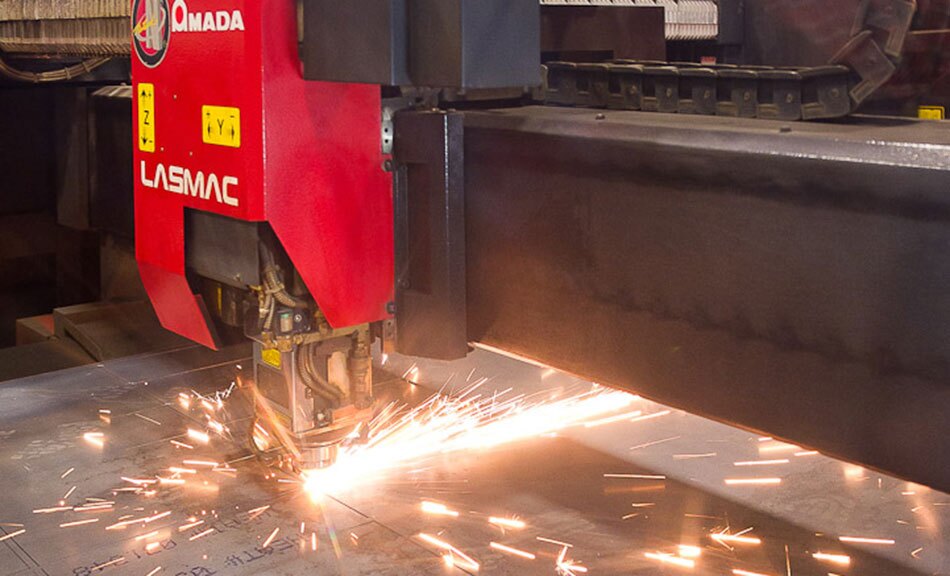
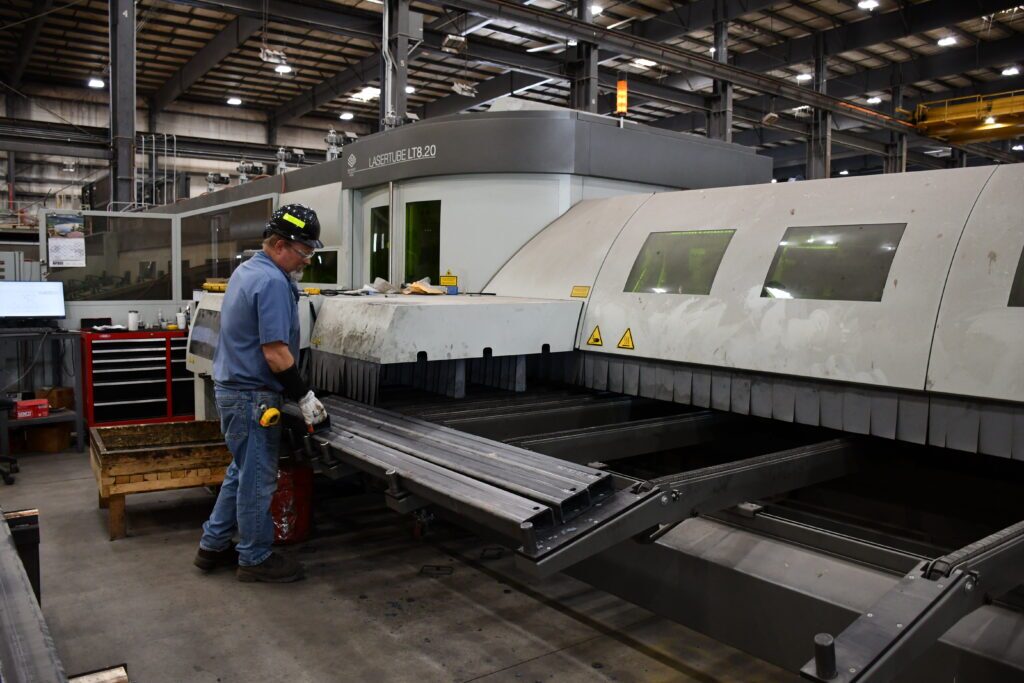
Laser cutting uses a focused beam of light to melt, burn, or vaporize material along a programmed path. The process delivers exceptional precision and repeatability, making it ideal for intricate designs and tight tolerances. Because the beam is highly concentrated, heat affected zones are minimal, which helps preserve material integrity.
One of the biggest advantages of laser cutting is edge quality. Parts often come off the table with smooth, burr free edges that require little to no secondary processing. This saves time downstream and improves overall part consistency. Key benefits of laser cutting include:
- High dimensional accuracy
- Clean, consistent edges
- Excellent performance on thin to medium thickness materials
In addition to precision, laser cutting supports automation and rapid changeovers, which makes it well suited for high mix, low volume production as well as repeat runs.
What is Shear Cutting and Why It is Still Widely Used
Shear cutting relies on mechanical force to slice metal between two blades, much like a large industrial pair of scissors. This method has been used for decades and remains popular for straight cuts in sheet metal. Shearing is fast, cost effective, and simple, especially for long, straight cuts on thin materials.
Unlike laser cutting, shear cutting cannot create complex shapes or internal features, but it excels at producing blanks and panels efficiently. Shear cutting is widely used because:
- It delivers high speed for straight cuts
- Equipment costs are relatively low
- It works well for high volume production of simple parts
For shops focused on basic geometry and throughput, shear cutting continues to be a practical choice.
Accuracy, Edge Quality, and Material Thickness Compared
When comparing cutting methods, accuracy and edge quality often drive the decision. Laser cutting leads in precision, producing the tightest tolerances and cleanest edges across a wide range of materials. Plasma cutting offers good accuracy, but edges may show more taper or dross, especially on thinner materials.
Material thickness also plays a critical role. Plasma cutting performs well on thick plates, where laser cutting may become slower or more expensive. Shear cutting, by contrast, is limited to relatively thin sheets and straight cuts only. In general, laser cutting excels at thin to medium thickness with high accuracy
Plasma cutting handles thicker material efficiently, while shear cutting works best for thin, flat sheets with simple geometry. Balancing these factors helps ensure the chosen method meets both performance and quality expectations. If you’re unsure which is best, it’s always best to reach out to the professionals for support.
Cost Considerations for Plasma, Laser, and Shear Cutting
Cost is always part of the equation. Laser cutting systems require a higher upfront investment, but they often reduce labor, finishing time, and scrap, which can lower overall project costs. Plasma cutting equipment is typically more affordable and offers strong value for heavy duty work. Shear cutting stands out for its low operating cost on high volume, straight cut jobs.
However, its limitations can lead to added processing steps if complex shapes are required. When evaluating cost, consider equipment and maintenance expenses, labor and secondary finishing needs, and material utilization and scrap rates. In many cases, laser cutting proves cost effective when precision and minimal rework are priorities.
Choosing the Right Cutting Method for Your Project
Selecting the right cutting method depends on your specific goals. Part complexity, material type, thickness, tolerance requirements, and production volume all matter. Laser cutting is often the best choice for detailed parts and tight tolerances, while plasma cutting shines in heavy fabrication. Shear cutting remains ideal for fast, straight cuts at scale.
Asking the right questions helps clarify the decision:
- How precise do the parts need to be?
- What material thickness is involved?
- Is speed or finish more important?
Matching the process to the project ensures better results and fewer compromises.
Turn to Norfolk Iron for Laser Cutting, Plasma Cutting, and Shear Cutting
Choosing the right partner is just as important as choosing the right cutting method. Norfolk Iron offers comprehensive fabrication services, including laser cutting, plasma cutting, and shear cutting, all under one roof. This range allows our team to recommend the most efficient and cost effective solution for each project.
With experienced operators, modern equipment, and a focus on quality, our team at Norfolk Iron helps customers move from concept to finished part with confidence. Whether your job requires precision, power, or speed, working with a trusted fabrication partner ensures the cutting process supports your larger production goals.
When you’re ready to begin your upcoming fabrication project, don’t settle for a subpar team. Instead, contact us today to begin your metal fabrication with the best team in the industry.

Follow Us